
.png?width=1200&height=675&name=Silver%20Bullion%20(2).png)
Silver Supply
Market Insights
Precious Metals History
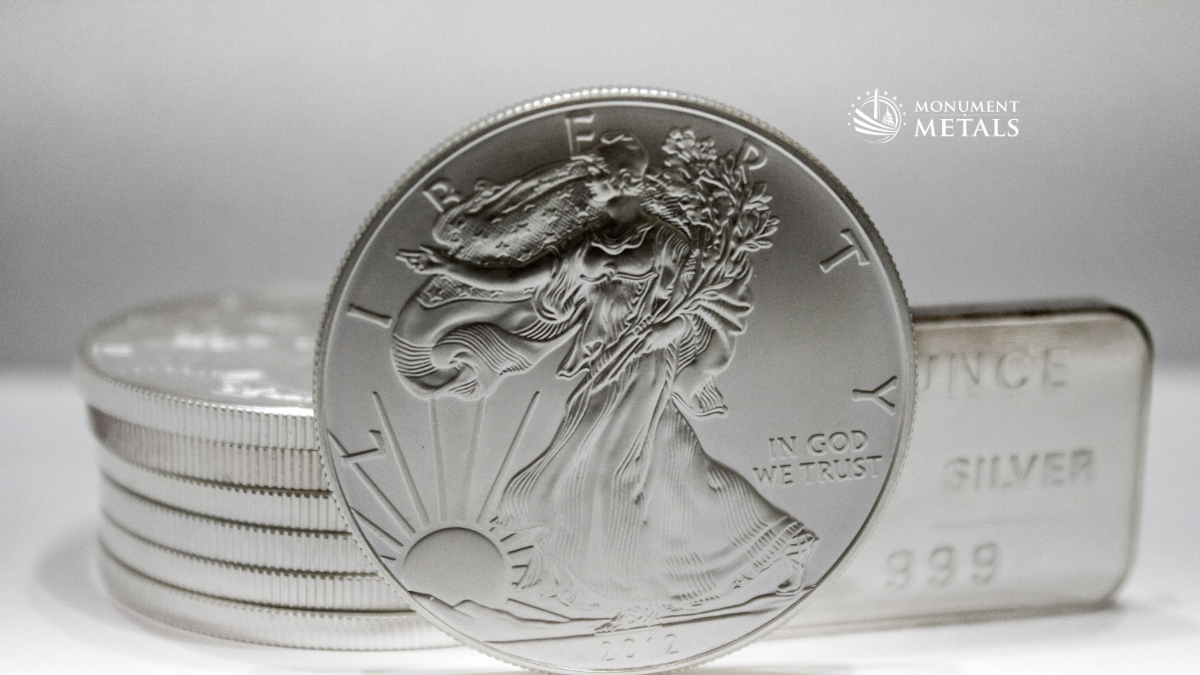

Product selection matters when buying precious metals. Coins, bars, and rounds all contain the same gold or silver, but they differ in how they're made, what they cost, and how easily they can be resold. Understanding those differences helps buyers get more value out of every purchase.
Here's how each product type works and which one fits different goals.
Coins are produced by sovereign mints, the U.S. Mint, the Royal Canadian Mint, the South African Mint, and others. Products like American Gold Eagles, Canadian Gold Maples, South African Krugerrands, and American Silver Eagles are among the most widely recognized bullion products in the world.
Coins carry a face value, a government guarantee of weight and purity, and near-universal recognition. That recognition matters. Buyers and dealers around the world know exactly what they're getting, which makes coins among the easiest products to liquidate.
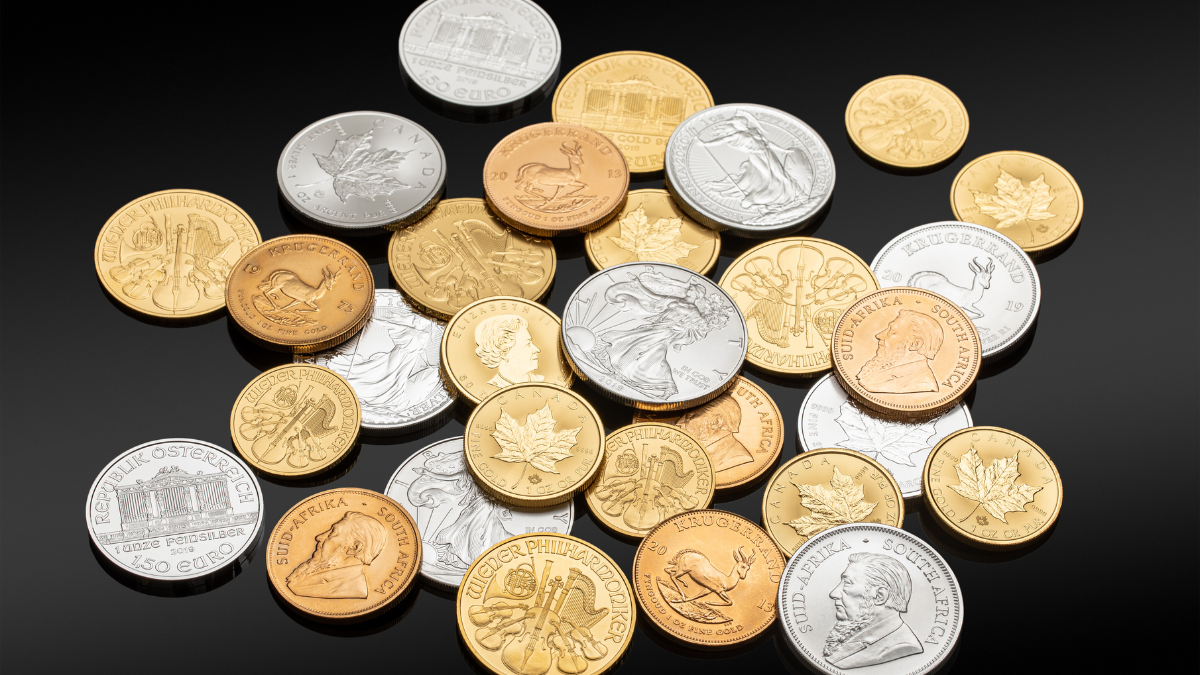
The tradeoff is premium. Government minting, limited annual production, and sovereign backing all add cost above the spot price. Coins tend to carry higher premiums than bars or rounds.
Coins are best suited for buyers who prioritize liquidity, recognition, and long-term resale confidence. For many investors, government-minted coins serve as the foundation of a physical metals position.
Related Reading: Why Government-Minted Coins Are So Widely Trusted
Gold bars and silver bars are produced by private refiners and mints. They come in a range of sizes, from fractional gram pieces to 100-ounce silver bars and kilo gold bars. Each bar is stamped with its weight, purity, and the refiner's hallmark.
The main advantage of bars is efficiency. They are simpler to produce than coins, which means lower premiums over spot price. For buyers focused on accumulating ounces, bars are typically the most cost-effective option available.

The tradeoff is flexibility. Bars don't carry face value or government backing. They rely on the reputation of the refiner, which is why well-known brands matter. Larger bars can also be harder to sell in partial increments, a 100-ounce silver bar can't be split.
Bars are best suited for buyers focused on accumulation. Lower premiums mean more metal per dollar, especially in larger sizes. That efficiency matters for investors who are building a position over time.
Silver rounds look like coins but are produced by private mints rather than governments. They are typically one ounce, stamped with a design, weight, and purity, but they carry no face value or sovereign backing.
Rounds sit between coins and bars in terms of premium. They offer the coin-like size and convenience at a lower cost than government-minted products. They are easy to handle, easy to store, and easy to trade in one-ounce increments.
The tradeoff is recognition. Rounds don't carry the same universal trust as a government coin. Any reputable dealer will buy them, but they may not command the same buyback premium as an Eagle or a Maple Leaf.
Rounds are best suited for buyers who want one-ounce convenience without paying the full premium of a government coin. They are popular with silver stackers who buy regularly and want to keep their cost per ounce low.
The right choice depends on what role precious metals play in a portfolio:
Many experienced buyers hold all three. Coins for the core position, bars for cost-efficient stacking, and rounds for flexibility. There is no single right answer, it depends on the buyer's priorities.
Coins, bars, and rounds all contain real precious metal. The differences come down to who produced them, what premium is attached, and how easily they can be bought and sold. Understanding those tradeoffs is one of the simplest ways to make more informed purchasing decisions.
Explore current pricing and deals at Monument Metals.
.png?width=1170&height=172&name=2026_1_oz_AGB_-_Website_Banner_1%20(1).png)
%20copy.webp?width=1200&height=675&name=What%20Is%20the%20Difference%20Between%20a%20Coin%E2%80%99s%20Mintage%20and%20Its%20Available%20Supply%20%20(1)%20copy.webp)