
.png?width=1200&height=675&name=Silver%20Bullion%20(2).png)
Silver Supply
Market Insights
Precious Metals History
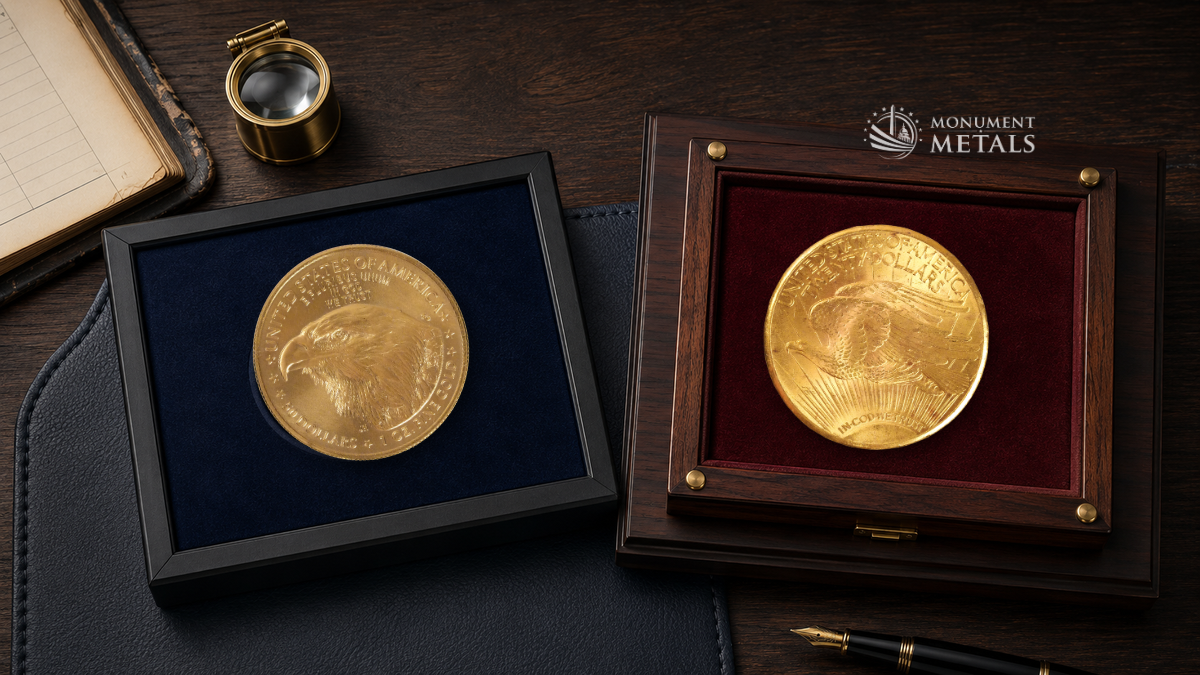


Most gold buyers start with one question: how much metal am I getting for my money? Experienced collectors eventually add a second one: what is this coin worth beyond the metal?
Those two questions lead to two different kinds of gold coins, and most serious collectors end up holding both. The balance between them depends on what a buyer is trying to accomplish, how much collector knowledge they bring to the table, and how they think about liquidity and risk.
.png?width=389&height=389&name=Static%20Content%20Library%20(1).png)
Bullion gold coins are priced primarily on their gold content. A one-ounce American Gold Eagle trades at spot price plus a modest dealer premium, typically a few percent above the value of the gold it contains. The coin's design, mint date, and condition have minimal effect on that price. What matters is the ounce of gold inside it.
The appeal is straightforwardness. Buyers know exactly what they are getting: a specific weight of gold at a price that tracks the market. Resale is equally clean. Any coin dealer will price it, buy it, and move it quickly because the value calculation is simple.
Bullion coins include the American Gold Eagle, American Gold Buffalo, Canadian Gold Maple Leaf, South African Krugerrand, and Austrian Gold Philharmonic. All are government-issued, all are priced close to spot, and all are among the most liquid gold products available anywhere in the world.
Numismatic gold coins carry value beyond their gold content. That additional value comes from scarcity, historical significance, condition, and collector demand. A pre-1933 Saint-Gaudens Double Eagle in MS-65 condition is worth significantly more than its gold content because relatively few survive in that grade and the market for them is active and deep.
The most significant U.S. numismatic gold coins include pre-1933 issues: the Saint-Gaudens $20 Double Eagle, the Liberty Head $20 Double Eagle, the Indian Head $10 Eagle, and various smaller denominations. Key dates and mint marks from the Morgan Dollar era, graded examples certified by PCGS or NGC, and coins with provenance from significant collections all command numismatic premiums above their melt value.
That premium is what makes numismatic coins interesting and also what makes them more complex to buy well.
.png?width=466&height=466&name=1910-S%20$5%20Indian%20Gold%20Half%20Eagle%20PCGS%20MS60%20(2).png)
Most experienced collectors treat bullion as the base layer of their gold holdings. It provides liquid, market-priced gold exposure that can be bought and sold efficiently without specialized knowledge. When a collector needs liquidity, bullion moves fastest because the buyer pool is largest and the pricing is transparent.
A common approach is to establish a bullion base first, building a core position in recognizable coins like Gold Eagles or Maple Leafs before layering in numismatic pieces. That foundation means a collector's overall position is not entirely dependent on collector markets for liquidity.
Numismatic coins are bought on a longer time horizon and with a different thesis. The collector is not just buying gold. They are buying the scarcity of a specific coin in a specific grade, and betting that the collector market for that coin remains active and that the premium holds or grows.
When that thesis is right, the returns can significantly exceed bullion. A key-date pre-1933 gold coin that appreciates in numismatic premium on top of gold price movement compounds two sources of value simultaneously. When it is wrong, the numismatic premium can compress while the underlying gold value remains intact, meaning the collector still owns the metal but gave up some upside on the premium.
This is the core risk distinction. Bullion value tracks gold. Numismatic value tracks gold plus collector sentiment, which is less predictable.
There is a reason experienced collectors do well in numismatic gold and beginners often do not. The numismatic market rewards knowledge. Knowing which dates are genuinely scarce, which grades are realistically achievable, which grading service designations carry real weight, and which dealers price accurately is expertise built over years.
A collector who buys an MS-65 Saint-Gaudens Double Eagle from a reputable dealer with a current PCGS or NGC certification is in a fundamentally different position from one who buys a raw, ungradedcoin at a claimed grade from an unfamiliar source. The certified coin has a documented grade. The raw coin has a sales pitch.
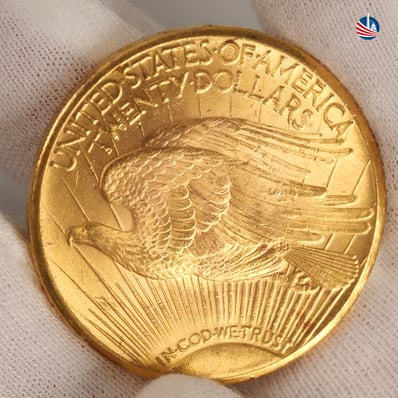
For buyers earlier in their collector journey, a higher allocation to bullion and a smaller, carefully chosen numismatic position makes more sense than going deep into collector coins before the knowledge base is there to support those decisions.
One clean approach is to divide holdings by what each portion is for.
Bullion holdings serve as liquid gold exposure, the portion that can be sold quickly at market prices with minimal friction. Numismatic holdings serve as a long-term collector position, expected to be held for years and sold through channels with access to collector buyers rather than general dealers.
Keeping those two purposes clearly defined prevents the mistake of treating numismatic coins as liquid assets in a pinch, or paying numismatic premiums for coins that will eventually be sold as bullion.
Another practical dividing line is what a collector knows well. A buyer who has spent years studying Morgan-era U.S. gold coinage, knows the key dates, understands grade population data, and has relationships with reputable dealers in that market can reasonably allocate more to numismatic gold in that specific area.
That same buyer exploring a new series they know little about is better served starting with bullion or lower-premium examples until their knowledge of that market is solid.
For buyers holding gold in a self-directed IRA, most numismatic coins are not eligible. Pre-1933 gold coins are classified as collectibles under IRS rules and cannot be held in an IRA. Bullion coins meeting purity requirements, including the American Gold Eagle and Gold Buffalo, are IRA-eligible.
Buyers with both IRA and non-IRA gold positions naturally end up with their numismatic holdings outside the retirement account and their bullion inside it, which reinforces the foundation-plus-layers structure most experienced collectors use anyway.
Bullion gold is straightforward. Numismatic gold is rewarding when you know what you are doing and expensive when you do not. Most collectors who hold both got there by starting with bullion, building knowledge of specific numismatic markets over time, and adding collector coins selectively as their expertise grew.
The balance is not a formula. It is a reflection of how much collector knowledge a buyer has, how long their time horizon is, and how much of their position they need to be able to move quickly.
What is the difference between numismatic and bullion gold coins? Bullion gold coins are priced primarily on their gold content and trade near spot price with a small dealer premium. Numismatic gold coins carry value beyond their metal content based on scarcity, historical significance, condition, and collector demand. A numismatic coin's price includes both its gold value and a premium that reflects the collector market for that specific coin in that specific grade.
How do collectors balance numismatic and bullion gold? Most experienced collectors use bullion as a liquid base layer and add numismatic coins selectively in areas where they have genuine knowledge. Bullion provides straightforward gold exposure that can be sold quickly. Numismatic coins are held longer-term with the expectation that collector premiums will hold or grow on top of the gold value.
Are numismatic gold coins a good investment? Numismatic gold coins can significantly outperform bullion when the collector thesis is right: a scarce coin in high grade with an active collector market can appreciate in premium on top of gold price movement. The risk is that numismatic premiums can compress. Buyers who succeed in numismatic gold typically have strong market knowledge, buy certified coins from reputable sources, and hold for the long term.
Can numismatic gold coins be held in an IRA? Most cannot. Pre-1933 gold coins are classified as collectibles under IRS rules and are not eligible for self-directed precious metals IRAs. Bullion gold coins meeting purity requirements, including the American Gold Eagle and American Gold Buffalo, are IRA-eligible. Buyers with both IRA and non-IRA gold positions typically hold bullion inside the IRA and numismatic coins outside it.
What makes a gold coin numismatic rather than bullion? A coin becomes numismatic when collector demand drives its price meaningfully above its melt value. Factors include low mintage, key date and mint mark combinations, high certified grade, historical significance, and active collector markets. A common $20 Saint-Gaudens Double Eagle in circulated condition trades closer to bullion value. The same coin in MS-65 grade carries a significant numismatic premium.
Where should a new gold buyer start: numismatic or bullion? New buyers are generally better served starting with bullion. Bullion pricing is transparent, resale is straightforward, and the market does not require collector expertise to navigate. Building knowledge of specific numismatic markets before buying collector coins reduces the risk of paying premiums that are difficult to recover at resale.
%20copy.webp?width=1200&height=675&name=What%20Is%20the%20Difference%20Between%20a%20Coin%E2%80%99s%20Mintage%20and%20Its%20Available%20Supply%20%20(1)%20copy.webp)