
.png?width=1200&height=675&name=Silver%20Bullion%20(2).png)
Silver Supply
Market Insights
Precious Metals History
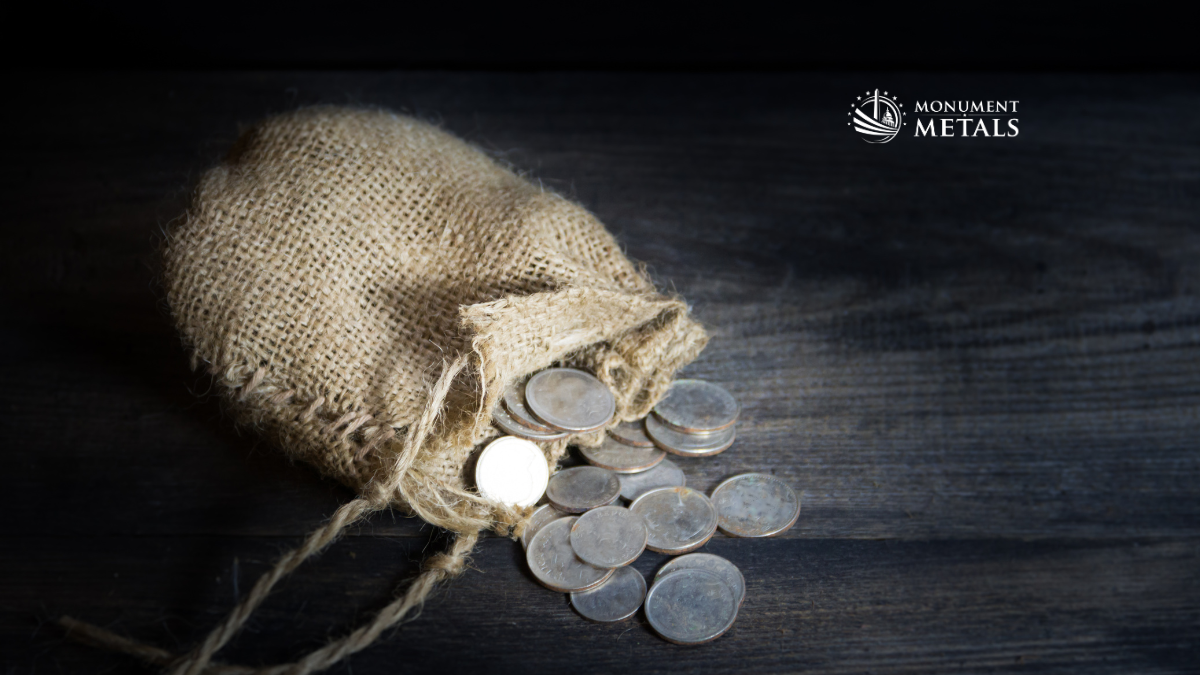

The name is misleading. Junk silver isn't junk. It's a category of pre-1965 U.S. coins that contains 90% silver and trades based on metal content rather than collector value. Worn, common, and carrying no numismatic premium, these coins are among the most practical ways to buy silver at a low cost.
For buyers focused on accumulating real silver without paying elevated premiums, junk silver deserves a close look. Understanding how it works, what it contains, and how to evaluate pricing helps you decide whether it fits your strategy.
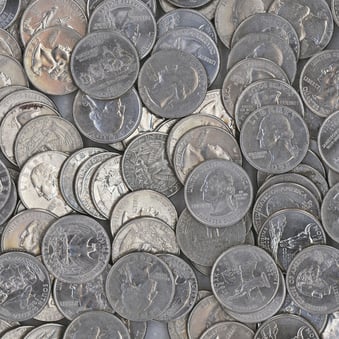
Junk silver refers to circulated U.S. coins minted before 1965 that contain 90% silver. The term "junk" simply means these coins have no special collector value. They're too common and too worn to interest numismatists. But their silver content is exactly what makes them valuable to bullion buyers.
Many buyers prefer the term "constitutional silver." The reasoning is straightforward: the U.S. Constitution required genuine precious metal in American coinage, and these coins were made when that standard was still in place. Whether you call them junk silver or constitutional silver, you're talking about the same thing: old U.S. coins with real silver content.
Not all old coins contain silver. The key cutoff for most denominations is 1964. Dimes, quarters, and half dollars dated 1964 and earlier are 90% silver. Kennedy half dollars from 1965 through 1970 are 40% silver, a separate and less common category. War nickels minted from 1942 to 1945 contain 35% silver. Silver dollars from 1935 and earlier are 90% silver but typically trade differently due to their size and collector crossover.
Every $1 of face value in 90% junk silver contains roughly 0.715 troy ounces of pure silver, regardless of which coins make up that dollar. Ten dimes, four quarters, or two half dollars all contain the same silver content.
This standardization is what makes junk silver easy to price and trade. Buyers and sellers communicate in face value terms rather than counting individual coins. A "$100 face value bag" contains roughly 71.5 troy ounces of silver. A "$1,000 face value bag" contains approximately 715 troy ounces.
That common language simplifies transactions. You don't need a scale or a calculator at the point of sale. Face value tells you exactly what you're working with.
Melt value is straightforward to calculate. Multiply the face value by the current silver spot price, then multiply by 0.715. At current silver prices around $80 per ounce, a $100 face value bag carries a melt value of approximately $5,720. That's the baseline against which dealer premiums are measured.
Junk silver rarely sells at exactly melt value. Dealers add a premium to cover their costs, and that premium fluctuates with market conditions.
In calm markets, premiums on 90% silver coins typically run 3% to 12% above melt value. Larger quantities like $100 or $1,000 face value bags generally carry the lowest premiums because dealers can process them efficiently. Smaller amounts cost more per ounce because of the handling involved.
During periods of high demand or market volatility, premiums can expand significantly. When buyers rush to acquire physical silver, the supply of junk silver tightens and pricing reflects that pressure.
One of junk silver's strongest arguments is its low premium relative to newly minted coins. Silver Eagles and other modern government coins often carry premiums of $5 to $10 per ounce or more above spot. Junk silver in normal market conditions trades much closer to melt value. For buyers maximizing silver per dollar, that difference is meaningful.
 Why Buyers Choose Junk Silver
Different buyers are drawn to junk silver for different reasons, and those reasons are worth understanding before you buy.
Cost-conscious stackers prioritize junk silver because of its low premiums. Every dollar saved on premium is a dollar that goes toward actual metal. Over time, and across multiple purchases, buying closer to melt value adds up to a meaningful difference in total ounces owned.
Junk silver comes in small denominations. A single dime contains about 0.0715 troy ounces of silver. A quarter holds roughly 0.179 troy ounces. For buyers who value the ability to transact in small amounts, whether for bartering or partial liquidation, the small size of individual coins provides flexibility that a one-ounce bar doesn't.
These coins were minted by the U.S. government and backed by the Treasury at the time of production. That history provides a layer of confidence in their authenticity. Each coin carries official markings and a design that has remained consistent for decades, making fakes easier to spot.
Junk silver has a few characteristics that buyers should understand going in.
Self-directed precious metals IRAs require silver with a purity of at least 99.9%. Junk silver at 90% purity does not qualify. If you're building a metals IRA, you'll need modern bullion products that meet the purity threshold.
These coins are circulated. They show wear, scratches, and years of use. None of that affects the silver content. A heavily worn quarter contains the same silver as a lightly worn one. For bullion buyers, condition is irrelevant.
Don't clean the coins. Cleaning removes the natural patina and can reduce any residual collectible value. More importantly, altered surfaces can raise authenticity questions when you go to sell.
Because junk silver is 90% silver rather than 99.9%, you need more physical material to hold the same amount of pure silver. A $1,000 face value bag weighs approximately 55 pounds. That's something to plan for if you're accumulating significant quantities.
Junk silver offers real silver content at some of the lowest premiums available in the bullion market. Pre-1965 U.S. dimes, quarters, and half dollars provide a practical, government-issued, highly divisible way to own physical silver. The name undersells the product. For buyers who understand how it's priced and what it's for, constitutional silver earns a place in most stacking strategies.
What makes a coin "junk silver"? Junk silver refers to pre-1965 U.S. dimes, quarters, and half dollars that contain 90% silver but have no special collector value. They're priced on their silver content, not their rarity or condition.
How much silver is in a $1 face value bag of junk silver? Every $1 of face value in 90% U.S. silver coins contains 0.715 troy ounces of pure silver, regardless of which coins make up that dollar amount.
Is junk silver a good buy right now? With silver prices significantly higher than a year ago, premiums on junk silver remain relatively low compared to modern bullion. For buyers focused on maximizing silver per dollar, it continues to offer strong value.
Can I put junk silver in a precious metals IRA? No. Self-directed IRAs require silver with at least 99.9% purity. Junk silver at 90% purity does not meet that threshold.
Should I clean my junk silver coins before selling? No. Cleaning removes natural patina and can reduce any residual value. Dealers and buyers prefer coins in their original, unaltered condition.
.png?width=1170&height=172&name=2026_1_oz_AGB_-_Website_Banner_1%20(1).png)
%20copy.webp?width=1200&height=675&name=What%20Is%20the%20Difference%20Between%20a%20Coin%E2%80%99s%20Mintage%20and%20Its%20Available%20Supply%20%20(1)%20copy.webp)