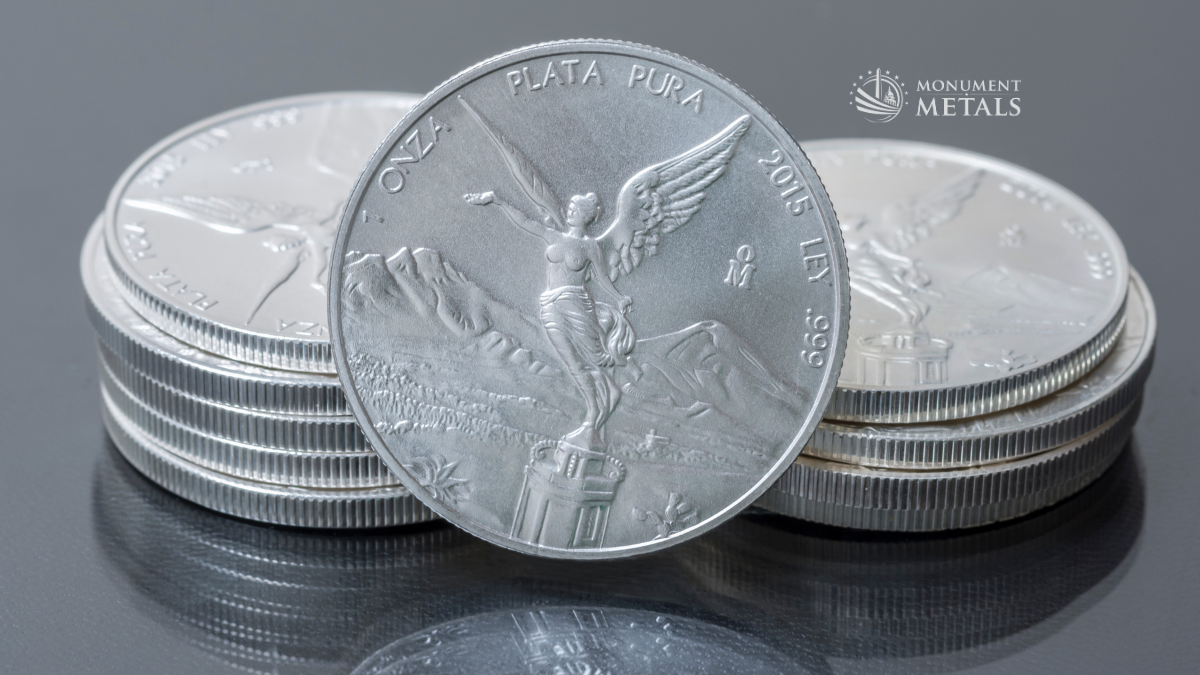
.png?width=1200&height=675&name=Lincoln%20Memorial%20Rounds%20(2).png)
Silver
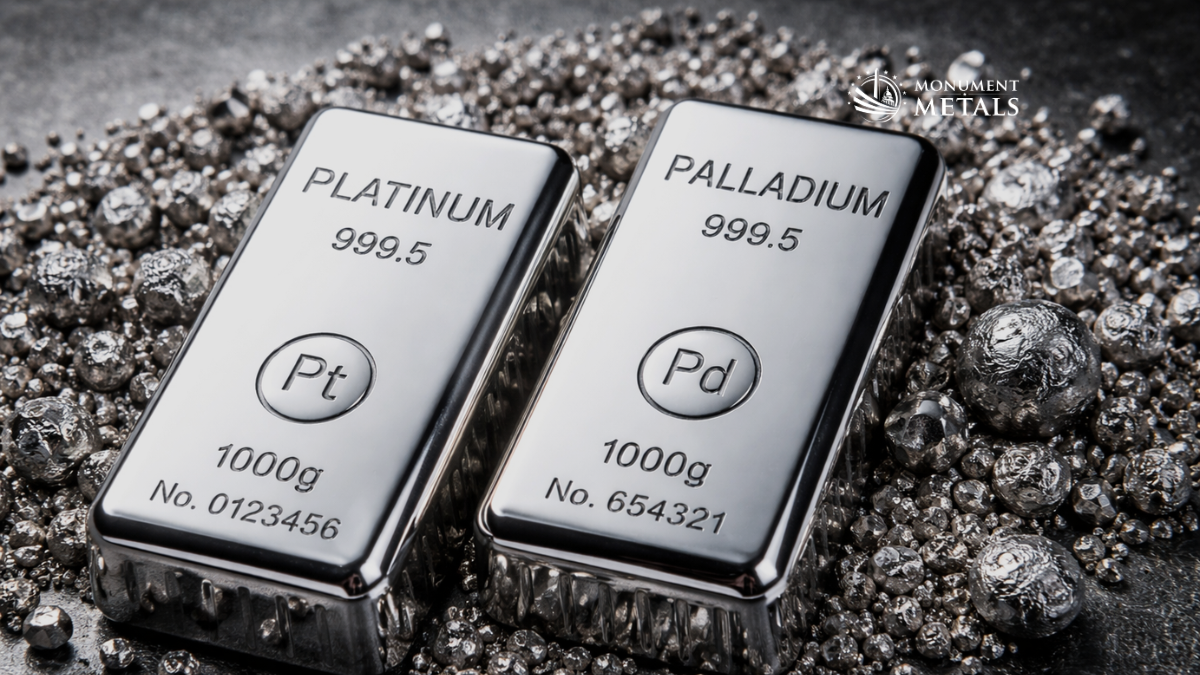

Platinum and palladium are the two other investment-grade precious metals, sitting alongside gold and silver in the market and in a self-directed IRA. Both are rarer than gold by annual mine production, both trade on major global exchanges, and both are available as coins and bars from reputable dealers including the U.S. Mint. If you have built a position in gold or silver and want to understand what else is out there, platinum and palladium are the natural next stop.
Platinum and palladium are part of the platinum group metals, a family of six closely related elements that share similar physical properties and tend to be found together in ore deposits. Of the six, platinum and palladium are the two most commonly available to retail buyers in coin and bar form. The U.S. Mint produces both the American Platinum Eagle and the American Palladium Eagle, giving these metals the same government-backed credibility that the American Gold Eagle and American Silver Eagle carry.
Gold and silver have industrial uses, but their prices are driven primarily by investment demand, central bank activity, and currency dynamics. Platinum and palladium operate differently. Both metals are critical components in catalytic converters, the devices that reduce harmful emissions in vehicle exhaust systems. That means global automotive production has a direct effect on platinum and palladium prices in a way that it simply does not for gold. Understanding that industrial relationship is the most important thing a new buyer can know before adding either metal to a position.
More than 70 percent of the world's platinum supply comes from South Africa, with Russia contributing most of the remainder. That geographic concentration makes platinum particularly sensitive to supply disruptions, labor strikes, and energy costs in those regions. On the demand side, platinum plays two roles: industrial use and investment. The industrial story is anchored in catalytic converters for diesel-powered vehicles, as well as a growing role in hydrogen fuel cells and clean energy infrastructure. The World Platinum Investment Council has reported that platinum supply ran at a deficit for multiple consecutive years through the mid-2020s, meaning mine production consistently fell short of total demand.
Platinum traded at a premium to gold for most of the 20th century, but that relationship has shifted over the past decade. As of early 2026, platinum trades at a meaningful discount to gold, a gap that reflects the decline of diesel vehicles in Europe and a surge in gold's investment demand. Some buyers view the current price spread as a long-term opportunity, though the relationship between the two metals can persist in either direction for extended periods.
 What Buying Platinum Looks Like
For buyers exploring platinum for the first time, coins are the most accessible entry point. The American Platinum Eagle is the flagship U.S. product, struck in one troy ounce and fractional sizes, and it meets the .9995 fineness standard required for IRA eligibility. The Canadian Platinum Maple Leaf from the Royal Canadian Mint is a widely recognized alternative. Platinum bars are also available, typically at slightly lower premiums over spot than coins, and offer a straightforward way to add platinum weight to a position.
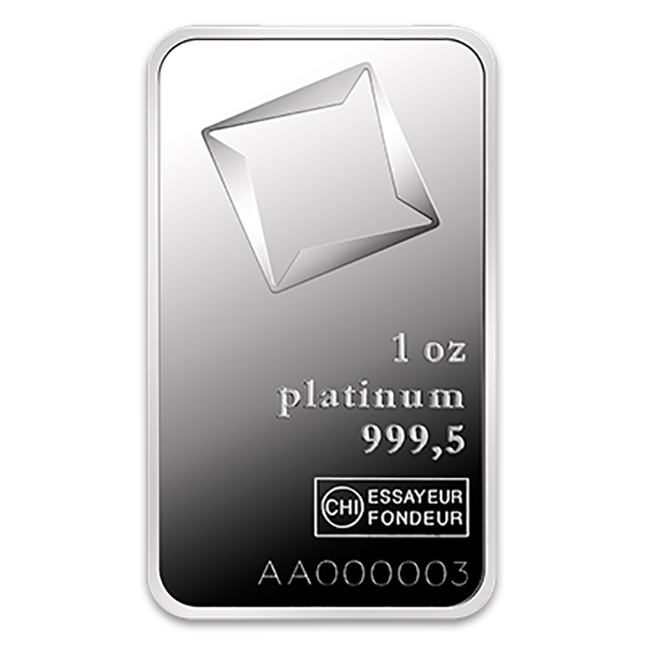
Physically, platinum is denser than gold and silver, so a one-ounce platinum coin is smaller than a one-ounce silver coin. It has a bright white appearance that is distinct from silver's gray-white tone, and it does not tarnish under normal conditions.
Palladium is the most industrially driven of the four precious metals. Roughly 85 percent of global palladium demand comes from catalytic converters in gasoline-powered vehicles, which use palladium to convert exhaust gases into less harmful emissions. South Africa and Russia together account for the majority of world supply, and the balance between automotive production and available supply has an enormous influence on price.
Palladium's price history illustrates how sharply an industrial metal can move. It rose from under $600 per ounce in 2016 to over $3,000 per ounce in 2022 before pulling back considerably as electric vehicle adoption grew and catalytic converter demand softened. That kind of volatility is a direct result of its industrial dependence. Buyers who understand the automotive demand picture and are comfortable with higher price swings are the ones palladium suits best.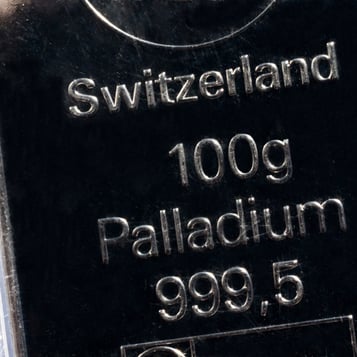
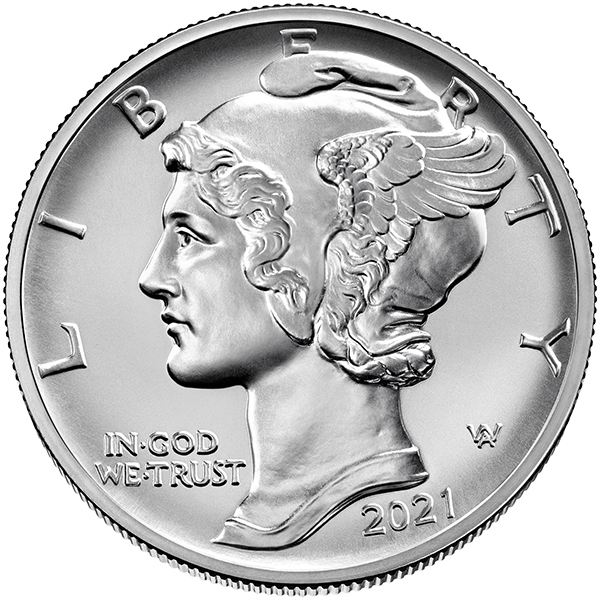
The American Palladium Eagle, introduced by the U.S. Mint in 2017, is the primary government-minted palladium coin available to U.S. buyers. Mintage is limited compared to gold and silver coins, which contributes to both its collector appeal and its occasional scarcity on the secondary market. Palladium bars are available but less commonly stocked than gold and silver bars at most dealers. Like platinum, palladium meets the .9995 fineness standard for IRA eligibility.
Because palladium is less liquid than platinum and considerably less liquid than gold and silver, buyers should approach it with realistic expectations about resale. It suits buyers who have already established a core gold and silver position and want targeted exposure to the platinum group metals.
Platinum has the broader product selection, the wider dealer network, and the stronger liquidity for retail buyers. More mints produce platinum coins, more dealers stock platinum bars, and the bid-ask spread on platinum is generally tighter than on palladium. If you are adding a third precious metal to an existing position for the first time, platinum is the more accessible starting point for most buyers.
Palladium has a smaller product universe and lower overall trading volume, which means finding specific products in stock can require more effort. Its higher volatility also means premiums can shift quickly when the market moves. That does not make it a lesser metal, but it does mean buyers should work with a dealer who carries consistent inventory and transparent pricing. Both metals are IRA-eligible at .9995 purity, so they can be held alongside gold and silver inside a self-directed precious metals IRA.
For buyers who want to diversify beyond gold and silver with something that has strong investment infrastructure and recognizable government-minted products, platinum is the natural first choice. For buyers with a specific view on industrial demand and the automotive sector, palladium offers a more direct connection to that story. Neither metal replaces gold or silver as the foundation of a precious metals position. They work as additions for buyers who want exposure to the platinum group metals and are prepared for price behavior that differs from what they are used to with gold and silver.
Most precious metals buyers start with gold and silver, and that is still the right foundation. But the market does not stop there. Platinum and palladium offer real investment merit, government-minted products, and IRA eligibility for buyers who want to go further. The key is going in with a clear understanding of what drives each metal's price and what level of liquidity you need. Monument Metals carries both, with platinum products and palladium products available, with transparent pricing and current inventory you can shop directly. If you are also curious how platinum and palladium stack up against gold and silver in a broader portfolio context, our post on gold vs. silver is a good place to start.
Yes. Both platinum and palladium meet IRS purity requirements for inclusion in a self-directed precious metals IRA. Each must meet a minimum fineness of .9995. Products that qualify include the American Platinum Eagle, the Canadian Platinum Maple Leaf, and the American Palladium Eagle. As with gold and silver, IRS rules require the metals to be stored at an approved depository rather than held at home.
By annual mine production, platinum is significantly rarer than gold. Roughly 6 to 8 million troy ounces of platinum are mined each year, compared to approximately 120 million troy ounces of gold. That means the annual supply of gold is roughly 15 to 20 times larger than platinum's. Despite that rarity, platinum currently trades at a discount to gold, which reflects demand dynamics rather than pure scarcity.
Palladium's price is closely tied to global automotive production because catalytic converters in gasoline vehicles account for the majority of palladium demand. When auto manufacturing is strong and supply is constrained, palladium prices rise sharply. When production slows or technology shifts reduce catalytic converter use, prices can fall just as quickly. That industrial dependence makes palladium more reactive to macroeconomic conditions than gold or silver, which have broader and more diversified demand bases.
Platinum and white gold look similar but are completely different materials. Platinum is a pure precious metal, with investment bullion produced at .9995 fineness. White gold is an alloy, typically yellow gold mixed with silver, palladium, or nickel, and then often plated with rhodium to achieve its white color. White gold jewelry is not a precious metals investment in the bullion sense. When you buy a platinum coin or bar from a reputable dealer, you are buying pure platinum, not an alloy.
.png?width=1170&height=172&name=2026_1_oz_AGB_-_Website_Banner_1%20(1).png)