In uncertain times, people crave stability. And in my two decades of working with collectors and investors across the country, one truth has remained constant: when the world gets shaky, smart people turn to precious metals.
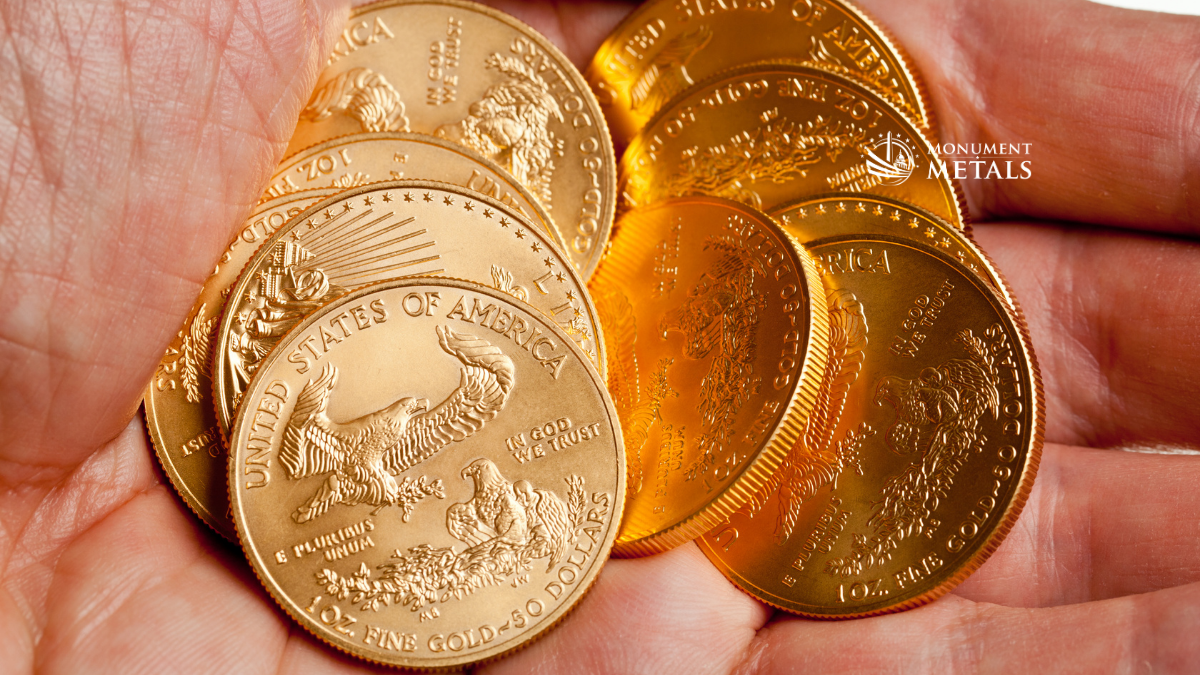
Whether it's a global financial shock, runaway inflation, or stock market volatility, gold and silver have a long history of being more than just beautiful, they’re reliable. They're not subject to the whims of political cycles or the printing presses of central banks. They're real, tangible assets that you can hold in your hand. And when economic crisis strikes, that matters. Let’s talk about why.
1. Gold Doesn’t Blink During a Crisis
When banks falter or fiat currencies wobble, gold holds its ground. It’s not just a safe haven, it’s a financial lighthouse in a storm.
Over the past 50 years, we've seen it time and again: recessions, inflationary periods, even major geopolitical conflicts, all have sparked increased demand for gold. Why? Because gold is one of the only assets in the world that has intrinsic value, independent of third-party promises. It doesn’t rely on a CEO’s quarterly report or a government’s word. It just… is.
2. Silver: The Underrated Shield
Silver doesn’t get as much media buzz as gold, but it should. It plays a dual role, as both a precious and industrial metal. That means when economies recover (and they always do eventually), silver often rises sharply due to renewed industrial demand.
And right now? Silver remains historically undervalued compared to gold. The gold-to-silver ratio is still far above its long-term average, which savvy investors recognize as a potential buying opportunity.
3. Tangibility Matters More Than Ever
In a world where so much of our wealth is tied up in digital systems—401(k)s, brokerage apps, online banks—owning physical metals feels like a return to something real.
You can hold it. Store it. Pass it down. It can’t be hacked or frozen. It doesn’t evaporate with a market crash.
When clients call and ask me, “What happens if things really go south?” I remind them: nobody ever panicked because they had too much gold or silver.
4. A Hedge Against Inflation and Uncertainty
When inflation starts eating away at the value of your savings, precious metals historically rise. It’s not theory, it’s been proven over centuries.
Back in the 1970s, during one of the most inflationary periods in U.S. history, gold soared more than 1,000%. Even more recently, in the wake of the 2008 financial crisis, metals surged as investors sought safe ground.
Metals don't promise fast riches. They offer security, preservation, and peace of mind, and that's exactly what most people are missing in times of crisis.
When the next crisis comes, and history tells us it always does, what will you be holding?
Precious metals are not the end-all-be-all. But they are an essential piece of a well-rounded strategy. And when everything else feels uncertain, holding something real can make all the difference.
If you're ready to take the next step, or just want to talk through your options, we’re here for you. Check out our latest deals here.

.png?width=1200&height=675&name=Silver%20Bullion%20(2).png)

%20copy.webp?width=1200&height=675&name=What%20Is%20the%20Difference%20Between%20a%20Coin%E2%80%99s%20Mintage%20and%20Its%20Available%20Supply%20%20(1)%20copy.webp)