
New to Precious Metals


If you've been browsing gold coins, you've probably noticed two American favorites side by side: the Gold Buffalo and the Gold Eagle. They look similar in price, they both come from the U.S. Mint, and they both hold a full ounce of gold. So it's fair to wonder what actually sets them apart.
The American Gold Buffalo is a one-ounce U.S. Mint bullion coin made of .9999 fine, 24-karat gold. That makes it essentially pure gold. The American Gold Eagle also contains one troy ounce of pure gold, but it's struck in a tougher 22-karat alloy with small amounts of other metals mixed in.
Beyond purity, the two coins differ in design, weight, available sizes and the kind of buyer who tends to reach for each. Let's walk through it all so you can pick the one that fits your goals.
The Buffalo's big claim to fame is its purity. When it launched in 2006, it became the first 24-karat gold coin the U.S. Mint had ever produced for investors. Every 1 oz Buffalo contains one troy ounce of gold at .9999 fineness.
Fineness is just a way of saying how much of a coin is pure metal. A .9999 fine coin is 99.99% gold, often called "four nines" gold. Karats measure the same idea on a 24-point scale, so 24 karats means the coin is essentially all gold. If you'd like a deeper look at how karats work, our guide on 24k, 22k and 18k gold breaks it down.
The Gold Eagle, introduced in 1986, is 22 karats, which works out to about 91.67% gold. The rest is a blend of silver and copper. Those added metals make the coin harder and more resistant to scratches and dings. That's a practical choice, and it also follows the tradition of older U.S. gold coins, which were struck in alloys for durability. 
Yes, and this is the part that trips up a lot of new buyers. A 1 oz Gold Eagle and a 1 oz Gold Buffalo each contain exactly one troy ounce of pure gold. (A troy ounce is the standard unit for precious metals, and it's slightly heavier than the ounce on your kitchen scale.) The Eagle simply adds a little extra alloy on top of that ounce, so the coin itself weighs more. Purity changes how the coin feels and wears. It doesn't change how much gold you own.
Both coins borrow from some of the most admired designs in American coinage. That's a big part of why collectors love them.
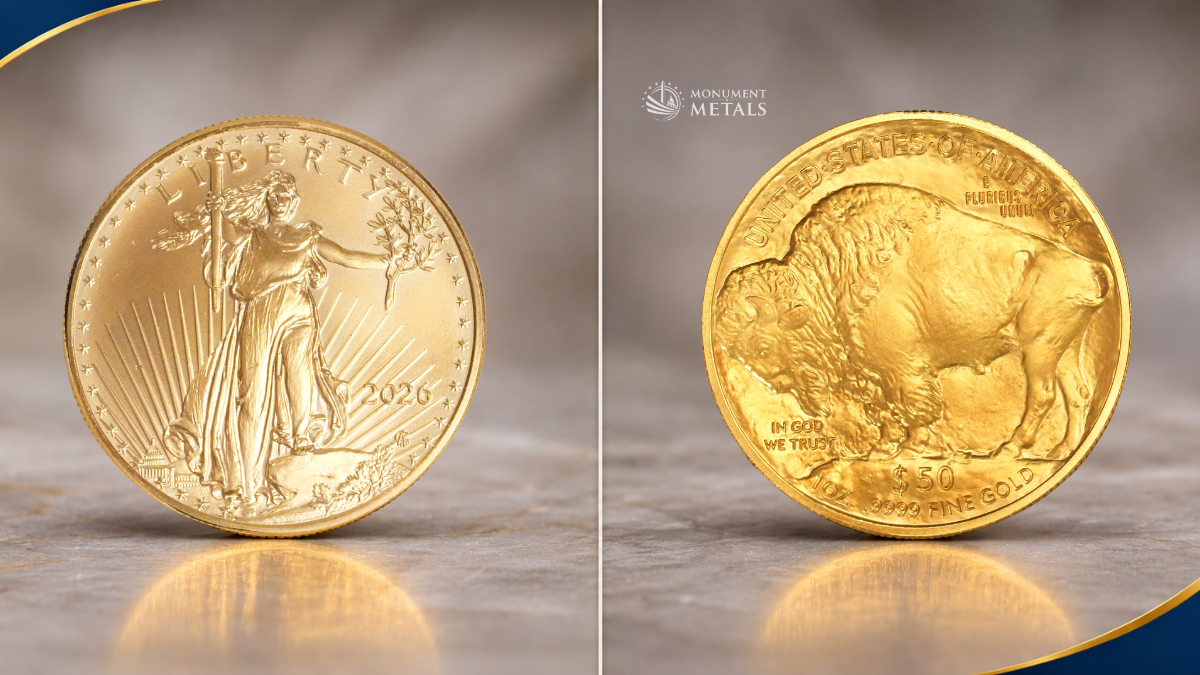
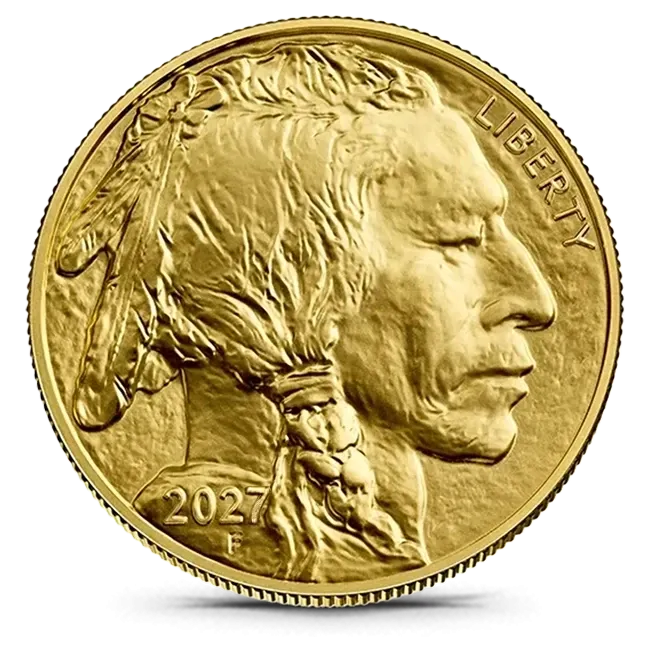
The Gold Buffalo is adapted from James Earle Fraser's Buffalo nickel, first struck in 1913. The front, or obverse, shows the profile of a Native American man. The back, or reverse, shows an American bison standing on a mound. It's a bold, rugged design, and the bison fits right in with the long tradition of bullion coins featuring native animals. Each year's release, like the 2026 1 oz Gold Buffalo, carries that same classic look.
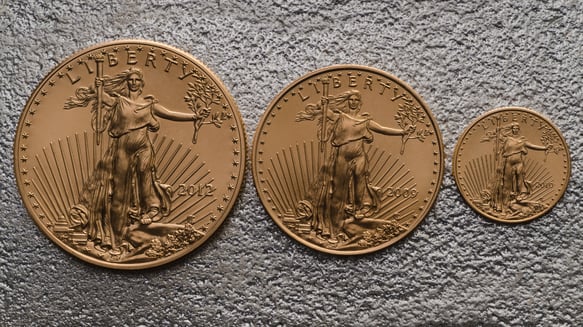
The Gold Eagle's obverse is based on Augustus Saint-Gaudens' famous design for the $20 Saint-Gaudens Double Eagle, first struck in 1907. Lady Liberty strides forward holding a torch and an olive branch. The reverse originally showed a family of eagles. In 2021, the Mint introduced a new reverse with a detailed eagle head. Curious how the modern Eagle relates to that older coin? Our post on the Gold Eagle versus the Double Eagle covers it.
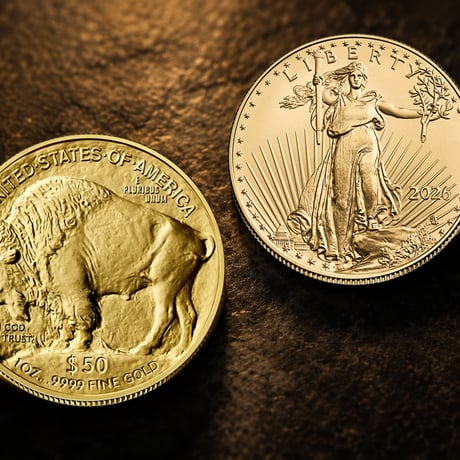
Close, but not identical. The 1 oz versions share roughly the same diameter, so they look nearly the same size when set side by side. The 1 oz Gold Eagle is heavier, though, because of that extra alloy, and the Gold Buffalo is still slightly thicker despite weighing less. If you've ever wondered why two one-ounce coins can differ, this pair is a perfect example. You may also notice a color difference. The copper in the Eagle's alloy gives it a slightly warmer, reddish tone, while the Buffalo shows the brighter yellow of nearly pure gold.
Here's a practical difference that matters if you're on a budget. Gold Eagles come in 1 oz, 1/2 oz, 1/4 oz and 1/10 oz sizes, so you can buy something like a 1/4 oz Gold Eagle without committing to a full ounce. The Gold Buffalo is essentially a one-ounce coin. The Mint did offer fractional Buffalos briefly in 2008, but those are uncommon today.
| Feature | American Gold Buffalo | American Gold Eagle |
|---|---|---|
| Purity | .9999 fine (24 karat) | 22 karat (about 91.67% gold) |
| Pure gold in 1 oz coin | 1 troy oz | 1 troy oz |
| Total weight (1 oz) | About 31.1 grams | About 33.9 grams |
| First year | 2006 | 1986 |
| Design roots | 1913 Buffalo nickel | 1907 Saint-Gaudens $20 gold coin |
| Bullion sizes | 1 oz | 1, 1/2, 1/4, 1/10 oz |
| Face value (1 oz) | $50 | $50 |
| Durability | Softer, scratches more easily | Harder, resists wear better |
About that $50 face value: it’s the coin’s official legal tender amount, and it’s far below what the gold inside is worth. Our post on why bullion has a face value explains why it’s there at all.
Premiums (the cost above the gold price) on the two coins are usually close, so compare current Gold Buffalo and Gold Eagle prices for the year you want before you buy.
Neither coin is "better." They just suit different priorities. Here's how buyers often think about it.
If purity is what draws you in, the Gold Buffalo is hard to beat. Many buyers simply like knowing their coin is as close to pure gold as it gets. Others pick it for the design, which feels like a piece of American history in your hand. The trade-off is that 24-karat gold is soft, so it's worth handling Buffalos by the edges and keeping them in capsules or tubes.
The Gold Eagle appeals to people who want flexibility and toughness. The harder alloy holds up better to handling, and the range of sizes lets you start small or build gradually.
Both coins are priced at the gold spot price plus a premium, which is the amount above the metal's value that covers minting, distribution and dealer costs. Buffalo and Eagle premiums are usually close, and which one costs a little more can shift by year and demand, so it's smart to compare current listings. Our guide to spot price versus premium walks through how to read those numbers.
You'll also see proof and burnished versions of both coins. These are collector strikes with special finishes, and they cost more than standard bullion coins. If your main goal is owning gold at the lowest cost over spot, bullion is usually the better fit.
Yes. Both coins are generally eligible for a precious metals IRA. The Buffalo easily meets the usual purity standard, and the Gold Eagle is specifically allowed even though it's 22 karat. For the full picture, see which coins qualify for an IRA.
Ready to choose? Shop Gold Buffalos or shop Gold Eagles.
Is the American Gold Buffalo pure gold? Yes. The Gold Buffalo is .9999 fine, which means it's 99.99% gold, or 24 karats.
Does a Gold Eagle have less gold than a Gold Buffalo? No. A 1 oz American Gold Eagle and a 1 oz Gold Buffalo each contain one troy ounce of pure gold. The Eagle just includes extra alloy metals, so the whole coin weighs more.
Why is the Gold Eagle not 24 karat? The Eagle uses a 22-karat alloy of gold, silver and copper to make the coin harder and more resistant to scratches. You can learn more in our guide to gold karats explained.
Can I buy a Gold Buffalo smaller than one ounce? Bullion Buffalos are essentially one-ounce coins. Fractional versions were only made briefly in 2008, so if you want smaller gold coins, the Gold Eagle is the easier choice.
Which coin is easier to sell later? Both are well-known U.S. Mint coins backed by the U.S. government for weight and purity, so dealers recognize and buy them readily. Your offer will mainly depend on the gold price and the coin's condition at the time you sell.
Are Gold Buffalos and Gold Eagles IRA eligible? Both are generally eligible for a precious metals IRA. Our article on IRA-eligible gold coins covers the details.
How should I store a Gold Buffalo? Because 24-karat gold is soft, keep your Buffalo in a capsule or tube and hold it by the edges. That protects the surface from scratches and fingerprints.