
Pricing & Premiums
New to Precious Metals
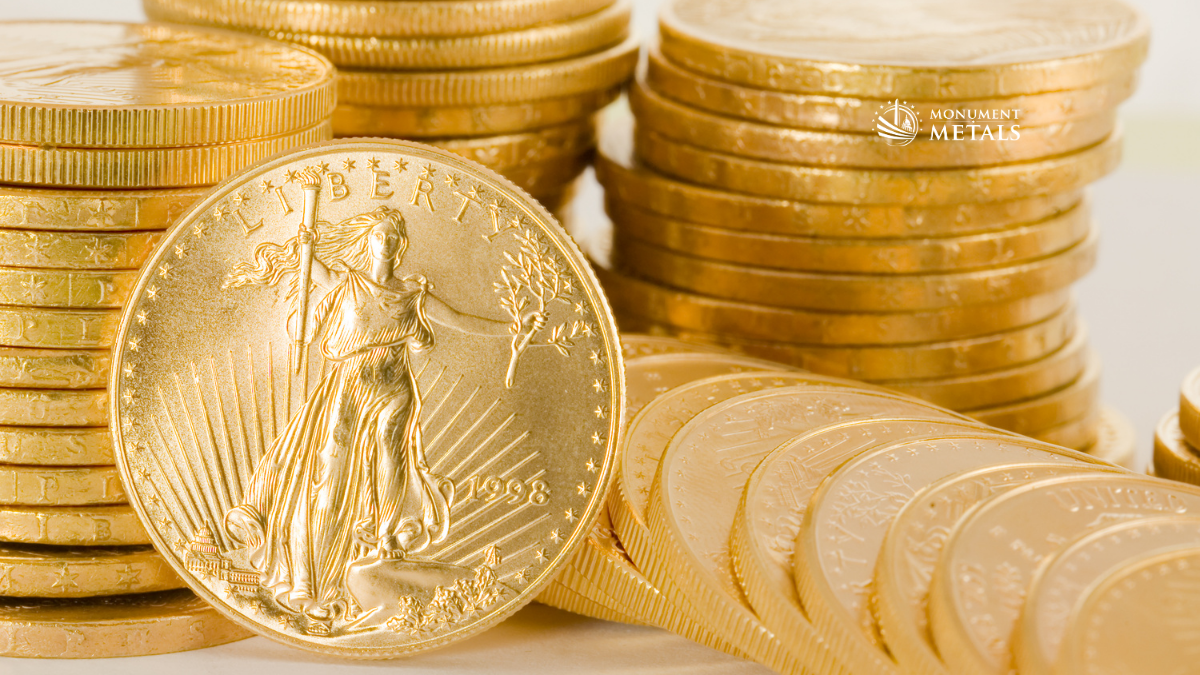


Gold Eagle, Double Eagle. They sound like they should be the same coin, right? If you've ever mixed them up, you're in good company. Both are American gold coins, both have "Eagle" in the name, and both can carry the famous Saint-Gaudens Lady Liberty design. But they're very different coins, and knowing the difference can help you avoid overpaying or buying the wrong one for your goals.
Here is the short answer. The American Gold Eagle is a modern bullion coin made by the U.S. Mint from 1986 to the present. It is struck in 22 karat gold and carries legal tender status. The Double Eagle is the $20 gold coin the U.S. struck for circulation from 1850 to 1933, in either the Liberty Head or Saint-Gaudens design, and its price often reflects collector value on top of its gold content.
Below, we compare the two side by side and explain what drives each coin's price. We also cover which one might fit you best. If you are new to the gold vocabulary, our guide to 24k, 22k, and 18k gold is a handy companion. You can also browse our American Gold Eagles as you read.
The American Gold Eagle is the official gold bullion coin of the United States. "Bullion" simply means a product valued mainly for its metal content rather than its rarity or history. The U.S. Mint launched the series in 1986, and it remains one of the most widely recognized gold coins in the world.
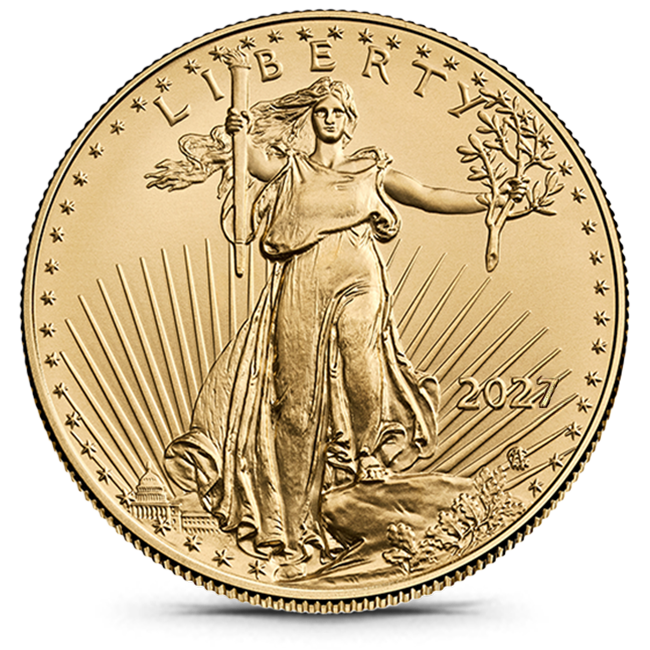
Gold Eagles come in four sizes, each with a face value. Face value is the dollar amount stamped on the coin.
The face value is symbolic. A 1 oz Gold Eagle is worth far more than $50 because of the gold inside it. Gold Eagles are "non-circulating legal tender," which means they are official U.S. money, but they are not meant to be spent at a store.
Gold Eagles are made from a 22 karat alloy: 91.67% gold, 3% silver, and 5.33% copper. The added metals make the coin more scratch resistant. The 1 oz coin still contains a full troy ounce of pure gold, so the coin itself weighs a bit more than one ounce. The front uses a version of Augustus Saint-Gaudens' walking Lady Liberty, borrowed from the old Double Eagle. That shared design is a big reason people confuse the two coins. Look closely, though, and you’ll spot differences. The Mint adapted the design for the modern coin, and the Gold Eagle shows 50 stars, one for each state. Saint-Gaudens Double Eagles show 46 stars (1907 to 1911) or 48 stars (1912 onward), matching the number of states at the time. In 2021, the back got a fresh eagle portrait designed by Jennie Norris of the U.S. Mint's Artistic Infusion Program. Because the switch happened partway through the year, 2021 Gold Eagles come in two versions: Type 1 with the original “Family of Eagles” reverse by Miley Busiek, and Type 2 with the new eagle portrait.
The Double Eagle is the $20 gold coin the United States struck for everyday use during the 1800s and early 1900s. The name comes from the old U.S. coin system. A $10 gold coin was called an "Eagle," so a $20 coin was a "Double Eagle." A single 1849 pattern coin exists, and regular production for circulation began in 1850. 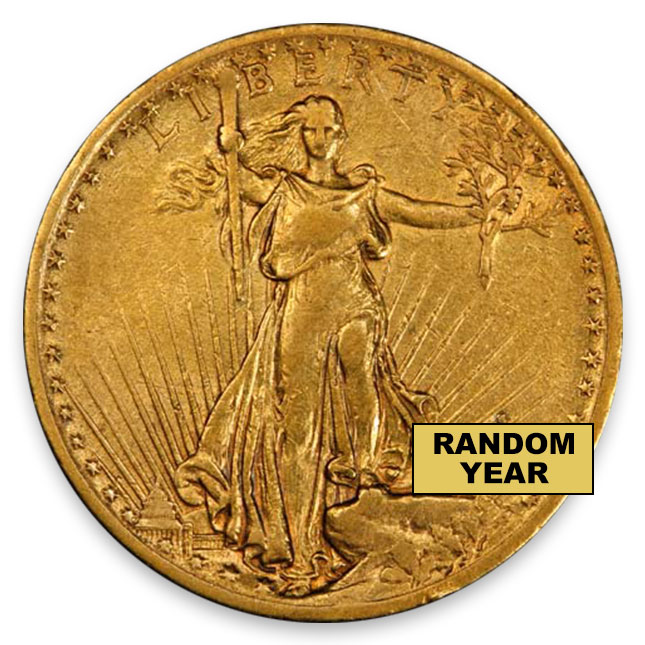
The first design, by James B. Longacre, shows Lady Liberty in profile and was struck from 1850 to 1907. These coins circulated during the Gold Rush and Old West eras. Besides Philadelphia, they were struck at branch mints in San Francisco (S), New Orleans (O), Carson City (CC), and, near the end of the series, Denver (D). Pick up a $20 Liberty Double Eagle or see everything we carry in our Liberty Double Eagle collection. 
In 1907, the design changed to Augustus Saint-Gaudens' striding Liberty with a flying eagle on the back. Many collectors consider it one of the most beautiful American coins ever made. These coins were struck at Philadelphia, Denver (D), and San Francisco (S). The Saint-Gaudens design ran until 1933, when the U.S. stopped making gold coins for circulation. Coins dated 1933 were struck but never officially released, so the series you will find on the market effectively ends in 1932. In fact, owning a 1933 Double Eagle is generally not legal. Only one is known to be legally in private hands, a coin the U.S. government approved for private ownership and sold at auction in 2002. Ten more surfaced in 2004, but after more than a decade in court, the government kept them. Grab a $20 Saint-Gaudens Double Eagle or browse all of our Saint-Gaudens Double Eagles.
Double Eagles are made of 90% gold and 10% copper, an alloy designed to hold up in daily circulation. Each coin contains 0.9675 troy ounces of pure gold, slightly less than a full ounce.
Here is a side-by-side look at the 1 oz American Gold Eagle and the $20 Double Eagle.
| Feature | American Gold Eagle (1 oz) | Double Eagle ($20) |
|---|---|---|
| Years Struck | 1986 to present | 1850 to 1933 (Liberty Head 1850 to 1907, Saint-Gaudens 1907 to 1933) |
| Face Value | $50 | $20 |
| Purity | 22 karat (91.67% gold, 3% silver, 5.33% copper) | 90% gold, 10% copper (about 21.6 karat) |
| Total Weight | 1.0909 troy oz (33.931 g) | 1.0750 troy oz (33.436 g) |
| Pure Gold Content | 1.0000 troy oz | 0.9675 troy oz |
| Diameter | 32.70 mm | About 34 mm |
| Original Purpose | Bullion for investors and savers | Everyday circulating money |
| Main Price Drivers | Gold spot price plus a bullion premium | Gold content plus grade, date, mint mark, rarity, and collector demand |
| IRA Eligible | Yes | No |
This is where the two coins really separate. A Gold Eagle's price tracks the gold market closely. You pay the spot price, which is the current market price for raw gold, plus a premium. The premium is the extra amount that covers minting, distribution, and dealer costs.
A Double Eagle has two layers of value. The first is melt value, the worth of its gold if it were melted down. Our guide on how to calculate melt value walks through the math. The second layer is numismatic value, which is the extra amount collectors will pay because of a coin's history, condition, and scarcity. We explore that balance in numismatic vs. bullion gold.
Large dealers list graded Saint-Gaudens coins at a wide range of prices, even though every coin holds the same amount of gold. The difference is grade. Grade is a professional rating of a coin's condition, usually on a 1 to 70 scale from services like PCGS or NGC. A higher grade means less wear and better eye appeal, which can add a meaningful premium. Our breakdown of PCGS and NGC coin grades explains what those numbers mean.
Some dates and mints produced far fewer coins, and many Double Eagles were melted over the years. A coin from a scarce date or a mint like Carson City can sell for much more than a common date in similar condition. Learn more about why mint marks matter. Common-date, circulated Double Eagles tend to trade closer to their gold value, although they usually still carry a premium above a modern bullion coin. Premiums on both coins change with the market, so check current pricing on each product page.
The best choice depends on why you are buying.
If you want the newest bullion option, the 2027 1 oz Gold Eagle is a clean place to start. For the classic side, explore our full selection of pre-1933 American gold coins.
Is a Double Eagle the same as a Gold Eagle? No. The Double Eagle is a historic $20 circulating coin from 1850 to 1933. The Gold Eagle is a modern bullion coin first made in 1986. They share a Lady Liberty design but differ in purity, gold content, and how they are priced.
Which coin has more gold? A 1 oz Gold Eagle holds exactly one troy ounce of pure gold. A Double Eagle holds 0.9675 troy ounces, so it is slightly less. See our troy ounce guide for how gold is measured.
Why is it called a Double Eagle? In the original U.S. coin system, a $10 gold coin was called an Eagle. The $20 coin was worth twice as much, so it became the Double Eagle.
Are Double Eagles still legal tender? Yes, they still carry their $20 face value. Their gold and collector value is far higher, though, so no one spends them as money.
Can I put Double Eagles in a gold IRA? Generally no, because pre-1933 coins are usually treated as collectibles. American Gold Eagles do qualify. Our IRA-eligible coins guide explains what counts.
Do all Double Eagles cost the same? No. Two Double Eagles with the same gold content can sell for very different prices depending on grade, date, mint mark, and scarcity. Common-date coins in circulated condition tend to sit closest to their gold value.
Why does the Gold Eagle look like the Saint-Gaudens Double Eagle? The U.S. Mint adapted Augustus Saint-Gaudens' Lady Liberty for the Gold Eagle's front when the series launched in 1986. Our post on why Lady Liberty appears on American coins covers the backstory.
Whether you want a modern Gold Eagle or a piece of history in a Double Eagle, you can shop both online at Monument Metals. Orders of $199 or more ship free, and you can see the details on our shipping page.